Se afișează postările cu eticheta tips. Afișați toate postările

Choosing A Toy Dog

A toy dog has the huge advantage that it is small. This often makes it an ideal dog for urbanliving or for older people with limited mobility. A toy dog does not need long walks. It will not takeover a small apartment. A toy dog fits into the modern lifestyle of many people today.There are a huge variety of toy dogs. They all have different characteristics just as larger breedsof dog do. It is important to get to know the what each kind of toy dog is like before you makeyour choice. Toy dogs are not all alike.It is thought that the breeding of toy dogs first began in Asia but varieties of toy dog can now befound from every part of the globe. They were bred for a variety of purposes. That stillinfluences the characteristics of the breed and will affect which one is right for you.Perhaps the most well known type of toy dog is the poodle. When any one mentions a toy dogthis is the kind of dog that most people think of. Toy poodles were bred from larger dogs thatwere used for hunting. Even the smaller toy poodles retain some of the characteristics of thelarger hunting dogs. They are bold, intelligent dogs that can be readily trained. But they can behighly strung and are not necessarily suitable for household with young children.Somewhat similar in appearance is the Bichon Frisbee. They tend to look like an unclipped toypoodle. But their temperament is somewhat different. They are a boisterous small dog thatinteracts well with children. They are said to have been bred as lap dogs in pre-revolutionaryFrance but after the revolution they had to get by on the streets and did not very successfully.They are a street-wise lap dog. They will chase every rabbit and squirrel they see.The Chihuahua comes originally from Mexico where it was bred as a source of meat. They havenow become a favorite toy dog. Their fine, smooth coat means that they do not need a lot ofgrooming. They do not tolerate children well and can be snappish. But they are often loyal anddevoted to their owners.The Maltese is a toy dog that was bred as a lap dog for the wealthy. It is still popular in that roleand is a fashionable lap dog that models and film stars like to carry in their oversize handbags.It is not good with children however and tends to bark at strangers.The Pekingese was once one of the most sought after toy dogs because they were so rare.Only a few had been imported from China. They are now well known in the West. They can bedifficult to train but mellow with the years. They are seldom tolerant of children or other animals.Their coat requires a lot of attention since their ears can easily become matted and infectionmay result. Their short noses can become a problem. They always snuffle but can sometimesbecome badly blocked. They make good guard dogs and can therefore be a good dog for anelderly and infirm person since they do not need a lot of exercise.Pugs have recently become very popular having been seen accompanying various fashionablestarlets. The look like tiny bull dogs with their hanging folds of skin. They can have similar nasalproblems to those of Pekingese because of their small nasal passages. But they make excellentpets. They do not need a lot of exercise. They are usually placid and will happily play withchildren. They are seldom aggressive with other pets. They are intelligent dogs that respondwell to training.

Category: 0 comentarii

How To Select Your New Dog

The dog that is right for you is not the same as the dog that is right for someone else. Beforeyou chose a dog consider what your needs really are.Perhaps you are looking for a family dog. The children have been pestering you for a dog andfinally you have decided that you will get one. Under these circumstances you should consider apuppy because a puppy will adapt to your children. It will grow up with them. As far as the dog isconcerned they are slightly larger puppies.But chose the breed carefully. Some dogs may be too dominant to live happily with children.Make sure you see the puppy's parents. If they have a calm temperament then the puppyprobably will too.If possible see the whole litter of puppies with their mother. Puppies should not be taken awayfrom their mother too soon. If a puppy is deprived of its mother too soon it will not be stable in itsbehavior.The puppy that hangs back shyly is always appealing. But it may not be the best one to chose.It is usually the runt of the litter. If you have a quiet home then it may be a good dog for you.Such a puppy may thrive when it is the centre of attention and has constant reassurance. In afamily with children a shy puppy may feel overwhelmed and develop neurotic behavior.The puppy that comes running to meet you confidently is the one for you if you have children.Watch the mother's reaction. She should be watchful of her puppies but will greet you with awag of her tail. Her calmness will have communicated itself to her puppies.A puppy's eyes should be bright and clear and not runny. Its nose should be wet and cold.Check for any signs of loose bowel action.It may be that a puppy is not the best choice for you. Maybe you don't want to go through thehassle of toilet training, broken nights and chewed shoes. Perhaps an older dog would be abetter choice.Older dogs can be particularly good for older people. Even pedigree breeds can be found inrescue centers. But cross breeds can make excellent pets. They seem to share the bestcharacteristics of both their parents. What is more you will have the benefit of knowing that youare doing a good deed by giving a home to an abandoned animal.Rescue centers often have puppies but they have many adult dogs that need good homes.They can also offer the new dog owner good advice on pet care. Their dogs are usuallyvaccinated against common canine diseases and spayed or neutered.When choosing an adult dog the temperament and size of the animal are important factors toconsider. A lovely natured dog that is too large will be no use to you if you live in an apartment.An overly assertive dog will be a constant problem if you are a shy retiring person. A dog thatmight make a wonderful security dog would be unsuitable for a family pet.So take your time and find the dog that matches your personality and needs.

Category: 0 comentarii

How To Prepare Your Home For A New Puppy

If you've never owned a puppy before or have not owned one for a long time than introducing apuppy into your home can be a bit of shock to your established routine. A small puppy is a livelyand curious small mammal that is learning all the time. It can get into scrapes that an older andmore experienced dog would avoid. You have to puppy-proof your home just as you wouldtoddler-proof it.The first thing to be aware of is that puppies chew things. In fact puppies chew anything andeverything. They will chew your shoes, clothing, carpets, telephone cables and electric wires,their basket or whatever else you can think of.If you have things that are too valuable to risk getting chewed then make sure they are kept outof the puppy's way. Make sure the kids do the same. Fix wires and any loose edges of carpetsdown carefully so they are not tempting. If you have expensive rugs then roll them up and putthem in a room that is closed to the puppy.Get the puppy a dog bed. Plastic is the best kind because it can be washed and is economical.Traditional wicker baskets look nice but will quickly reduced to a ruins by a chewing puppy. Linethe bed with washable bedding. This will all get chewed but it can be replaced.Make sure that you puppy cannot get into any cupboards and utility rooms where householdchemicals are stored. Child safety locks can be fitted to kitchen cupboards.Outside the house make sure that the puppy is not exposed to any chemicals that might beused on the lawn, plants or path. Keep the puppy away from treated areas. This applies tonewly chipped bark mulch. This can be harmful to dogs.Make sure you have a suitable puppy harness and leash for your puppy. A harness is oftenbetter for a puppy in the first weeks than a conventional collar. It gives you something to grabhold of if the puppy makes a run for it and it is more comfortable for puppy. Get your puppy usedto a collar gradually.You new puppy will need several short walks every day. It does not need long walks. Somebreeds of dog have joints that are particularly susceptible to damage and they should not walktoo far when they are young. The main purpose of the walks at this stage is to accustom thepuppy to going to the toilet outside. Always go equipped with a pooper scoop so that you canclean up afterwards. Dog feces can transmit worms that are harmful to children.Inside the house you may consider getting a puppy pen. This is somewhat like a plan pen forpuppies. It will help keep the puppy out of danger when you are cooking or doing otherhousehold tasks. It also offers the puppy a quiet place to rest away from the hurly burly of familylife.

Category: 0 comentarii

The Many Sizes Of Poodles

Poodles are an enormously popular breed of dog and rightly so. They have enormousadvantages as a pet.The poodle is an intelligent animal that enjoys the company of human beings and adapts well tourban life. Perhaps its main advantage for the modern pet owner is that it comes in a wide rangeof sizes. A toy poodle can be the ideal for an apartment dweller who needs a small dog.As a result the poodle has become the archetypical lap dog. But in fact the poodle is an ancientworking dog. Records suggest that it many have been first bred in Ancient Egypt where it wasused as a herd dog and hunting dog.Images survive from Egypt which show poodles participating in drag net hunting, retrieving birdsfor hunters and herding cattle. The Ancient Egyptians may even have begun to breed differentsizes of poodle. So the great variety of poodle sizes may go back a long way in history.Small poodles are not necessarily a recent innovation. That may be why the keep so much ofthe character of the larger dogs. They are brave, bright animals that are learn quickly, butquickly get bored. This is still the profile of working animal rather than a lap dog.The American Kennel Club (AKC) recognizes three sizes of poodle: the standard, the miniatureand the toy. The types are determined by the dog's shoulder height. A standard poodle shouldbe more than fifteen inches high at the shoulder. Miniature poodles must be less than 15 inchesbut more than ten inches at the shoulder. Toy poodles should be under ten inches high at theshoulder.Some breeders have recently begun to offer what they call teacup poodles. These grow toabout eight inches in height. They are not yet recognized by the AKC but they are proving to bevery popular with dog owners. They are much sought after and command high prices. They suitthe modern trend for very small dogs. Dogs of this size can be easily carried about town. Theyhave become something of a fashion statement.Many people are attracted to poodles in the first place because they are a nonshedding dog.That is to say they do not leave hairs all over the house. They shed some hairs but not as muchas other breeds of dog. This is an advantage to allergy sufferers in particular. It can also beadvantage if a dog owner does not want the hassle of constant cleaning of carpets andupholstery.Poodles also appeal to many people because their coats can be clipped into a variety ofattractive forms. All Sizes of poodle can be clipped in the same way. Poodles were first clippedin this way when they were used as gun dogs that would leap into the water after ducks that hadbeen shot by hunters.There are various styles of clip. Some are suitable for the show dog and require a lot ofmaintenance. Others are suitable for the general pet owner and are more practical.

Category: 0 comentarii

Non-Shedding Dog Breeds

All dogs shed their coats just like humans shed their hair but some dogs shed less hair thanothers. If you find dog hair on the carpet is a nuisance or you have an allergy then one of thebreeds of dog that are regarded as non shedding may be the one for you.There are a number to choose from. One of the best known and most popular is the poodle.They come in a number of sizes but they all the same breed. The full-sized poodle is amagnificent animal especially when their coat is cut in the traditional style. They were originallybred as hunting dogs. Their curly coat was an advantage when they went into the water. Theyare bold, courageous animals at their best. They like lots of exercise and should beprofessionally clipped. If you dislike the pom pom style of poosle clipping then you can let thecoat grow naturally. But it is still best to clip them around the eyes or they can get infected. Theircoat will also need clipping in warm summer weather because it can become uncomfortable hot.The smaller poodles may be better if you have limited space. The large ones need lots ofexercise. A toy or miniature poodle is an ideal house dog. Their coats can be clipped in thesame as way as the large poodles. All poodles get excited by noise and commotion. They canbe highly strung around children especially if they have not become accustomed to them froman early age.Another good option for a non shedding dog is the cockapoo. This is a cross between theAmerican spaniel and the poodle. They are usually good with children and are very playful andloyal. But they need a lot of grooming. This is an intelligent, small dog that makes a good familypet. It does not need as much exercise as a large dog.The Italian greyhound is a good choice for anyone who wants a non shedding dog. They are asmall version of the racing greyhound and very elegant. They have a gentle nature but tend tobe timid. They prefer a quiet household with no children. Since their coat is sleek they requirevery little grooming. Despite their athletic build they do not need as much exercise as somedogs.A more rambunctious choice for a lively family dog might be the Airedale terrier. These dogshave a short, wiry coat. They are extremely active dogs that love to play with children so long asthe children have been taught to treat them with respect. They are very loyal and will defendtheir families to the death. While they respond to training they are very self-willed and need firmdiscipline. Like all terriers they are highly intelligent which makes them great pets in theappropriate context.

Category: 0 comentarii

Lesser-Known Dog Breeds

Dogs come in many shapes and sizes. They are one of the varied species on the planet. Allthese different kinds of dog originated from the wolf. It is almost impossible to believe it but thePekinese is more closely related to the wolf than is the German Shepherd.This great variety of dogs results from selective breeding over millennia. For centuries humanbeings have been choosing those characteristics in dogs that they found desirable for somereason. Dogs have been selected for their small size so that they fit down badger hole or makelap dogs. They have been selected for their large size so that they can act as guard dogs andshepherd dogs. They have been selected for thick coats in cold climates or to be almosthairless.The dog is one of the oldest of domesticated animals and over the many centuries that theyhave lived and worked with humans they have played many roles. Consequently, there areinnumerable breeds of dog. They have been bred to meet the requirements of differentoccupations and to meet the aesthetic standards of different societies.Often toy breeds have been developed from working dogs. The Affenpinscher is an example ofthis. It is a toy version of the pinscher and schnauzer family. It makes a good family pet becauseof its affectionate nature. This is a highly intelligent dog that is highly trainable. The coat is wiryand usually dark in color.The Anatolian Shepherd is less well known than the familiar German Shepherd. But its strongbuild and courageous nature makes it an ideal security or hunting dog.The Basenji or African Hunting Dog is a silent dog. It has been bred to have no bark so that itdoes not disturb game. It is not a particularly affectionate animal but will become accustomed topeople if handled from an early age.A very different kind of dog is the Bouvier des Flandres. This dog was bred as a herd dog inFrance. It looks somewhat like a terrier. But it has a placed nature. The coat is rough andusually dark in color. They are often used in police work or as a guide dog for the visuallyimpaired. They are intelligent and respond well to training.The Ovtcharka from Central Asia is a large dog that has been used for herding. It has a fearlessnature and is very brave. They usually have their ears and tails docked when they are puppies.From Poland comes the Owczarek Nizinny which is a medium sized dog. Its coat is long andoften covers its eyes. They make excellent pets but hate to be left alone for long as they arevery social.

Category: 0 comentarii

How To Control Incessant Dog Barking

Dogs bark because it is one of their primary means of communication. They are social animalsthat have evolved to live in packs. But barking is only one means by which they communicate toone another not the only one. It is an extreme signal that expresses joy or fear. If a dog isbarking incessantly then something is wrong. It is not natural for a dog to bark all the time.A dog owner has to think like a dog to control incessant barking. You have to work out whatyour dog is trying to tell you. It may be your dog is barking because you have not heard hisother signals. It is the equivalent of shouting to make yourself heard.Perhaps your dog is lonely. A dog that is left alone all day will bark to attract attention. A dogneeds its pack and for a domestic dog that is you. If you have to be out at work or school thenconsider finding a dog walker.It is possible that a dog is not a suitable pet for you if you need to spend long periods out of thehouse. A cat or a lizard might be better for your needs. Dogs are intensely social. They getanxious when they alone.If the dog barks incessantly when you are there it is asking for your attention. That may be for agood reason. It may want to go outside to attend to a call of nature. It may even be warning youabout something. Dogs have woken their owners and saved them from burning houses. Yourhouse may not be burning down but the dog may sense something in your behavior that is notquite right. Helper dogs are trained to earn epilepsy suffers when an attack is imminent. Theyare highly sensitive to changes that you may not notice. A dog will often respond to depressionin a family member. A dog can be like the canary in the mine it can detect psychological andsocial tensions in the household.If there is no obvious reason for the dog to bark incessantly then it may be possible to train it notto bark so much. Training collars are often helpful in this respect as they are in other forms ofbehavior. A collar that delivers a small electric shock when a dog barks may be enough toprevent excessive barking. There are also collars that deliver a burst of citronella when a dogbarks. Either can be useful. Long haired dogs may not feel the sting of an electric shock andshort haired or small dogs might find it too sharp. Be guided by your veterinarian in this matter.Perhaps the best form of training is your attention. A kind word or look from you is the dog's bestreward. When your dog engages in inappropriate behavior stand still and do not respond. Say"No" firmly when he barks but do not make any other response. Sometimes dogs bark becausethey have learnt that it gets them attention.

Category: 0 comentarii

Hollywood Dogs

From Rin Tin Tin and Old Yeller to Frazier's Eddie, dogs occupy a special place in Americanmovie and television history. Their breeding and training is a multi-million dollar industry in itsown right. Getting the right dog for the part can make the difference between a film or showsucceeding or being a disastrously expensive flop. Rin Tin Tin is credited with single handedly,or four-pawedly, saving Warner Brothers Studios from bankruptcy. Dogs are as important asany human stars to the Hollywood machine in that respect and they are treated accordingly.A dog on the screen will instantly focus the attention of viewers. Almost anyone can empathizewith a dog. A dull film can be enlivened, poor acting can be eclipsed by canine appeal, and abad script has no effect on a dog that just does what comes naturally.The kind of roles that dogs have played in Hollywood films and American television expresssomething of the place of the dog in popular imagination. In the early films that featured dogsthe scene is always a rural one. These films are almost an off-shoot of the Western movie andcontain many of the same themes.Dogs like Rin Tin Tin, Old Yeller and Lassie express what philosophers and theologians haveoften regarded as the permanent things of human morality. They embody the virtues of loyalty,devotion, love, justice, bravery and self-sacrifice which are so often absent in modern society.They seem to take the viewer back to simpler time when these values were upheld.A more knowing audience raised on horror films and choreographed violence was thought to beimmune to the charms of the "dog movie." When Joe Camp pitched the idea of a film with a dogas the main character the studios dismissed his idea. It would never work they told him. Today'saudiences just would not buy it.So instead he made his film "Benjii" himself. It was a reshaping of the old theme with an edgier,urban dog who is rescued from an animal shelter. This lovable cross breed spoke to the issuesof a more troubles society. The film became huge success. Benjii went on to stardom and thebackers reaped a fortune out of merchandising "Benjii" toys.With Eddie the canine character in the television show "Frazier" we see another take on themovie dog. Frazier the sophisticated psychiatrist is brought back to the old verities of home andfamily loyalty by the little terrier. The dog acts a foil silently critiquing the behavior of the urbaneintellectual. His pomposities are punctured and his humanity is revealed in his relationship withthe dog.Doubtless the "dog movie" will morph into to further manifestations of the genre in the future.Hollywood knows when it is on to a money spinner.

Category: 0 comentarii

Famous Cartoon Dogs

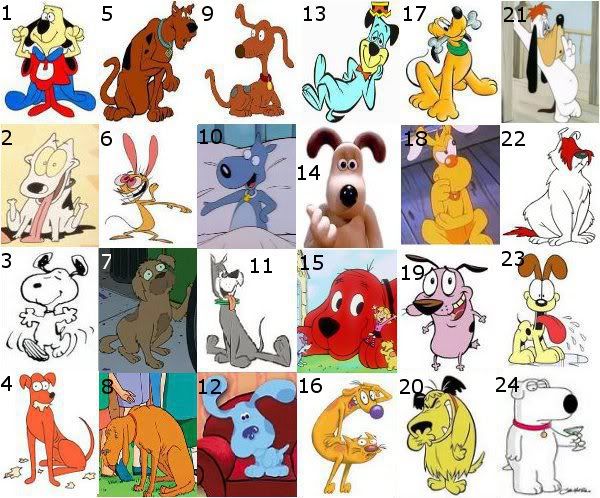
The American love of dogs is expressed nowhere better than in the cartoons. Since cartoonswere first drawn dogs have featured in them. Dogs in the cartoons express something veryfundamental about the popular American psyche.Long before films made cartoons universal dogs appeared in the cartoon strips that newspapersran. That is where the cartoon dog first began to develop its characteristic traits and become aniconic figure.Little Orphan Annie had her faithful dog Sandy. The cartoonist Harold Gray used Sandy as aside kick for his feisty female lead character. Whether she was fighting Nazis or investigatinghaunted houses Sandy was never far away. Every strip ended with Sandy's trade market "Arf!"Sandy never had much to say. He could not be said to have been a fully delineated character.That was never the case with the Snoopy. Snoopy is a more recent addition to the cartoon striphall of fame. He is Charlie Brown's dog in Schulz's "Peanuts" cartoon strip. He first appeared inthe syndicated strip in 1950. He has since made the transition to television and big screen.Snoopy always dominated the "Peanuts" cartoons and seemed to lead a much richerimaginative life than the children who were supposed to be the main characters of the cartoon.The little beagle could invariably be found on top of his kennel writing his novel. When not doingthat he was dressed as a World War I fighter ace fighting the Red Baron. Unusually for a dog,even in the cartoons, he owned an original Van Gogh and a Van Wyeth. The Van Gogh wassadly destroyed by fire in one episode.A completely different take on the dog character in cartoons is Odie in the Garfield comics. Odienever had anything to say. All he did was to slobber. The intellectual part of the partnership wasGarfield the cat. Even that sometimes abusive relationship between the cartoon cat and dogreflects something of the conflicted relationship that is often seen between family pets. At adeeper level perhaps the cartoon also has something to say about sibling rivalry.Today's leading cartoon dog has to be Santa's Little Helper who appears in the Simpsons. He isprincipally Bart's dog and their relationship encapsulates the special place that is accorded tothe child/dog pairing in American popular culture. There is an innocence of sentiment in thebond between the boy and the dog that captures the way in which childhood is envisaged in theUSA. For the city kid of the late 20th and early 21st century that is a condition that is all toooften unattainable but the cartoon image of the dog maintains the myth.

Category: 0 comentarii

So You Want To Be A Dog Breeder

Not everyone is cut out to be a good dog breeder. If you're willing to invest the time to learn howto breed healthy puppies and have a strong commitment to your animals, dog breeding is aheart-warming experience. In fact, it's a lot of fun!The joys of dog breeding are limitless - waiting for the big day as the puppies develop in thewomb, witnessing their entry into the world, and nurturing them through their first six to eightweeks of life can be a tremendously rewarding experience. But to be a really good dog breeder,you must care about more than the financial "bottom line." You have to have genuine love andconcern for the animals you've taken into your charge. The best dog breeders create happy,healthy puppies for truly loving homes.There's more to breeding dogs than one small article can cover. You have to know the best timeof year for breeding and how to provide the best environment for mating, birth, and early care.Good dog breeders need to understand more than the dogs under their care: they must be ableto maintain a successful small business. Most of all, good dog breeders are willing to invest thetime and effort necessary to learn all the ins and outs of breeding before they begin.Your most important building block in breeding happy, healthy puppies is your female dog. Shemust be in heat before she can breed. Typically, this happens every six to seven months.However, even though she may go into heat while she's young, she may not be physicallymature enough to carry, deliver, and care for her new babies. You should wait until your dog isphysically mature before breeding her. For some breeds, this may be two or more years of age.Your veterinarian can help you decide when the time is right for dog breeding. Vets know aboutyour animal, and they know how to perform and interpret the necessary tests and physicalexams. It's best to wait until your vet tells you your female dog is ready to breed. If you don'tgive her enough time, you could lose both mother and her puppies.Even when your vet has given you the go-ahead, you'll have to find the appropriate male tomate with your little lady. Be sure the dog you choose for her is healthy, and verify with hisowner that he is of a pure bloodline, particularly if you want to register your puppies.Mating usually works best when you bring your female to the male because the male needs tobe comfortable to perform his task. That usually happens in his own territory.Most female dogs aren't fertile until they've been in heat about ten days, and they remain fertilefor about four days. Fertility periods vary, so consult your vet to identify the most favorable timesfor mating. You'll also have to go through some trial and error to learn what works for yourfemale dog.Mating is only the beginning of a successful dog breeder's work. You'll have to be a dedicatednurse, mid-wife, and nanny for your dog and her puppies. And good dog breeders are verycareful to find warm, loving homes for their precious ones. You can find lots of good advice andpersonal contacts to help you succeed through your vet, other breeders and, of course, throughInternet websites dedicated to dog breeding.

Category: 0 comentarii

Socializing Your Golden Retriever

How your Golden Retriever reacts to and behaves with other people and animals depends onhow well he was socialized. Socializing dogs means getting them used to adults, children, otherdogs, cats, rabbits, and the world in general.Fortunately, for owners of Golden Retrievers, nature has already done half the work. Goldensare friendly, smart, energetic dogs who love to please. They are normally patient and loving withchildren, though there are exceptions. Most Goldens are friendly to strangers and good withother animals. However, you may find a Golden who is only comfortable with one sex, withadults but not children, or good with other Goldens but not with other dogs or cats. Socializationdepends not only on the breed of the dog but on his early experiences.Three factors contribute to how well your dog will become socialized: his genetically-inheritedcharacteristics, he experience with his mother and siblings, and his early life experience.Though some over-breeding may have created exceptions, most Goldens are genetically-proneto be open and friendly.As a newborn, your puppy learned how to behave and react from copying its mother andlittermates. In addition to genetic pre-disposition to certain behaviors, its mother's example willhelp shape your Golden's reactions to the world. For this reason, it's important to make sure thebreeder has selected animals with good, even temperaments for breeding. Of course, you can'tknow about an adult's past if you are adopting a rescue. But you can probably draw some prettygood conclusions by his behavior when you bring him home.If your Golden Retriever puppy separated from his mother before age of seven weeks, heprobably won’t have had the chance to learn many of the acceptable social signals andresponses. He may tend to be nippy or aggressive toward strangers, men only, women only, orchildren. He may not tolerate other animals very well. And although he may show aggressiontowards people, he may be timid around other dogs because he has not learned what to expector how to behave.Some Golden Retriever who have been physically or mentally traumatized by abuse or a fearfulevent. This leaves an emotional scar, a memory that the dog can't process and leave behindhim. Most Goldens that have been traumatized carry the scar with them and require specialattention throughout their lives. Their fear responses may be expressed as overt aggression orflight. While these situations are difficult to change, abundant love and careful discipline mayhelp your Golden Retriever move beyond a traumatic event.The best time to socialize your Golden Retriever is during his/her "adolescence" (from 8 weeksto 8 months). During this time, you should provide many opportunities for your Golden to be withother people and in different situations. Earlier than 8 weeks, your puppy is not capable oflearning social skills. After 8 months, he may be too set in his ways to adjust rapidly to newsituations. During that window of adolescence, you will have to offer plenty of reassurance andencourage your Golden to interact. He may be shy at first, but with loving encouragement andpraise, he should become more adventurous.Successful Golden Retriever socialization involves frequent contact and interaction with people(especially children), other dogs, and other animals in general. Your Golden will learn to feelcomfortable with strangers as well as learn appropriate behaviors in social situations with otheradults, children, and animals. As he ages, he'll carry these positive experiences with him.Golden Retrievers who are not given lots of opportunities for social interactions early in life maybe behavior problems down the road, so it's very important that you take the right steps withyour puppy to teach him how to behave in public. Your Golden Retriever will repay you with alifetime of loving, happy companionship.

Category: 0 comentarii

Grooming Your Golden Retriever

Brushing your Golden Retriever regularly will help prevent shedding (especially important if youhave allergies) and matting of his fur. Matting is not only unattractive, but it's uncomfortable foryour dog as well. Brushing also helps you remove burs and other foreign matter that couldthreaten his health. Regular grooming will help maintain a shiny, healthy coat and enhance yourGolden Retriever's quality of life.Grooming your Golden Retriever is a time-consuming process. Grooming should be done atleast once, preferably twice, ever week. You can expect to spend about one-half an hour in thegrooming process. The first step in the grooming process is a good brushing. Brush the entirebody, from head to tail. When you've finished brushing, you can use a comb to remove anyremaining loose hair and help distribute oils evenly throughout your Golden Retriever's coat.While you're accomplishing hair removal, you can also inspect your pet's roots and skin for ticksand fleas or skin irritations. This will also be a good time to inspect his ears to be sure they'reclean and healthy and trim his nails.You should give your Golden Retriever regular baths, too. Though it's a little complicated, thepath will keep his coat and skin in good condition and reduce your exposure to allergens. Afterbrushing to get rid of tangles and loose hair, bathe your Golden Retriever with a shampoodesigned specifically for dogs. Human shampoos are too harsh for a dog's sensitive skin. You'llfind that two baths a month will be sufficient to maintain your Golden's coat. If you do itconsistently, your Golden Retriever's coat will be easier to brush and clean.Because Golden's have longer fur, it is important to prevent matting. Daily brushing willaccomplish this best, especially if you use metal combs or brushes. Taking the easy way bycutting the matts out is not advisable, as it could injure your pet, and it will certainly detract fromhis naturally beautiful coat. Avoid using scissors for grooming. Brushes and baths are the bestway to prevent matting and maintain your Golden's health.Trimming your Golden Retriever's nails regularly is also important. Too-long nails are bad foryour dog's health. They can split and bleed profusely. They can change the shape of the footHow To Take Care Of Your Dog’s Health© Wings Of Success Page 31 of 79and cause other joint problems if they force your Golden Retriever to walk so as to protect thetoo-long nails.If you have never done it before, it might be wise to take your Golden to the vet to learn how todo it properly. Most dogs don't like having their nails clipped, and you may pick up some goodhints on how to do it without a struggle. When you do clip your Golden's nails, you should beaggressive, trimming them about 1/16 inch or 2 millimeters, from the quick. You can expect tosee some bleeding now and then, so keep some styptic power nearby. You'll probably need toundertake this task every few weeks.Now, about your Golden Retriever's ears. Their ears are easily infected if you don't clean themregularly. Ear infections are very painful for dogs, and you'll want to assure your Golden is freeof this health risk. Symptoms that may indicate ear infections include head shaking andscratching the ears, painful reactions when the ears are touched, discharges or foul odorscoming from the ears, and blisters, swelling, or redness on or around the skin. If you notice anyof these symptoms, you should take your Golden to the vet before the problems get worse orbecome irreversible.You should clean his ears once a week using a commercial ear-cleaning solution to preventinfection. Many people don't realize that hair can grow inside and into dogs' ears. Use ahemostat to carefully remove any hair inside the ear canal. Then use cotton or a cloth with thecleaning solution to gently clean no further than one-half an inch into the ear. Do NOT use Qtipsor alcohol to clean your Golden's ears. And do not use water or a syringe to clean his ears.Leave this delicate and sometimes dangerous task to the vet. If you use tools like a hemostat,be sure they are sterile.Good, regular grooming is essential to the health and well-being of your Golden Retriever. Ittakes some time from your daily routine, but it also helps you bond with your pet. If you don'thave the time, you should take your Golden Retriever to a dog-grooming professional. Nowmatter how you do it, you must assure that your Golden receives regular grooming and baths.

Category: 0 comentarii

Grooming And Brushing Tips For Dogs That Are Hypoallergenic

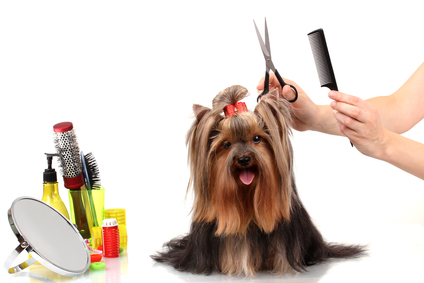
Buying a hypoallergenic dog may be a great solution for reducing your allergic reactions to doghair and dander, but you should know that these dogs have special grooming needs. Mosthypoallergenic dogs have short fur that is more like human hair that dog fur. This means thatthey shed as much and need as many haircuts as their human companions.Grooming is a very important part of caring for a hypoallergenic dog, and if you don't have timeto do it yourself, plan on regular visits to the professional groomer. You should plan on dailybrushings and monthly baths. If you don't have the time and can't afford to pay for this service,you may want to consider getting another breed.Some of the more popular hypoallergenic dog breeds include terrier, basenji, bichon frise,poodle, Chinese crested, greyhound, havanese, Irish water spaniel, and shih Tzu. Most of theseare smaller dogs, and many of them are quite temperamental. Until your dog has grownaccustomed to the grooming routine, he may growl and snip at you.If you can't cope with these temper tantrums, you may want to use the professional groomer totrim and bathe your hypoallergenic dog. Chain pet stores normally have a grooming department,and you'll be able to find many groomers in the yellow pages. Some groomers will even come toyou in their mobile grooming vans. But while finding a groomer may be easy, finding one youcan depend on may be more of a challenge.The first time you trim your hypoallergenic dog's air, you'll decide how long you want to leavethe remaining coat. You may choose the show-dog cut, but you are not limited to that look. Afterthe trim is done (whether by a groomer or you), inspect the job to be sure the cut is even andthat the dog's skin is cut-, scrape-, and scratch-free. You may need to apply a small amount ofantibiotic to any breaks in the skin as a precaution.It's a good idea to have your hypoallergenic dog's face hair and nails trimmed at the same timeas the regular cut. Most dogs do not like the pedicure but, with practice patience, you can wintheir cooperation. It's important to regularly clip your dog's nails, as they can become a healthHow To Take Care Of Your Dog’s Health© Wings Of Success Page 29 of 79hazard if they grow too long. Clip up to about 2 millimeters (1/16 inch) from the cuticle, andexpect at least a little bleeding. Keep styptic powder handy just in case.Most hypoallergenic dogs will enjoy the daily brushing, and it's important to maintain this habit toprevent shedding, matting, and "alien" debris from collecting in your dog's coat. If your long-hairhypoallergenic dog has persistent knots in his fur, you may want to brush it more often ormaintain a closer trim.Aside from the benefits of good hygiene and proper grooming, caring for your hypoallergenicdog this way gives you time to share physical affection and devoted attention to yourhypoallergenic dog. Many people who are not comfortable with normal dogs will enjoy thecompany of a hypoallergenic dog, so you should maintain a beautiful healthy coat at all times.Your special hypoallergenic dog may be a bit of a prima dona, and the attention they receivefrom both friends and strangers will only confirm their valuable opinions of themselves.Hypoallergenic breeds tend to be small, cute, and cuddly - if a bit nervous or temperamental.But if you have allergies or are sensitive to dog fur and dander, you may find a hypoallergenicdog to be the best friend you ever had. Show him how much you appreciate him by providing,regular thorough grooming and bathing. You'll be glad you did.

Category: 0 comentarii