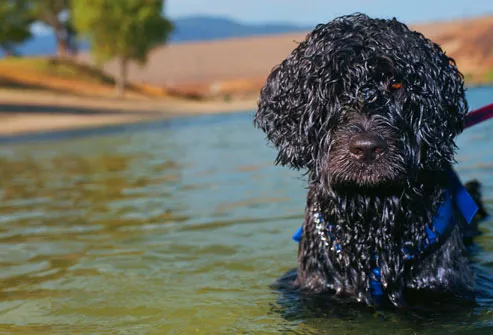
Dehydration is caused by the excessive loss of fluids. The condition must be treated by thereplacement of fluids. It can result from a dog being kept in hot conditions for too long or fromillness. Vomiting and diarrhea or a high fever will all cause dehydration.When a dog becomes dehydrating the electrolytes in the dog's bodily fluids get out of balance.The electrolytes are mineral salts such as sodium, potassium and chloride. This can result indamage to organs such as the kidneys and liver. Ultimately this can prove fatal.Dogs do not have sweat glands like humans so they cool themselves by panting. This can leadto dehydrations just like excessive sweating can lead to dehydration in humans.A dog must always have access to clean, fresh water. Keep a bowl of water accessible to thedog at all times in the house, yard and dog pen. If you use a dog pen in the house make surethere is water available there too. Change the water in all the dog's bowls at least every day.Never let the dog become overheated. Do not let it stay out in the yard in hot weather unless ithas shade. But it is better to bring it indoors especially if you live in a warm climate. Dogs with aheavy coat are very prone to overheating. It may be best to have them clipped for summer.Dogs should not be left in cars. Even with the window open slightly a car can quickly overheat.This can happen even in winter because the car acts like a greenhouse. So if you need to leavethe dog, when you go into a store say, tether it somewhere shady. Encourage local stores tohave a dog tethering spot at which water is available.When you take your dog for a walk and especially if you take it jogging with you make sure ithas access to water. Many dogs will happily lap water poured from your own water bottle. Youcan pour some into your hands if the dog can't drink from a jet of water. It's a good idea to keepsome water and a bowl in the car.Dried food is best for a dog's dental health but always make sure it has plenty of water too. Ifyour dog is drinking from the toilet bowl this is not a good idea because there can be unpleasantchemical cleaners used in the bathroom. Give the door more water in its own bowl.If your dog becomes seriously dehydrated you will notice that is nose is dry, its eyes looksunken and its skin lacks elasticity. A good test is to press the gums and if the color comes backquickly after you release the pressure then the dog is hydrated. But if the color comes back onlyslowly then the dog may be dehydrated.A seriously dehydrated dog should only be allowed to drink water in small amounts slowly. Toomuch water all at once and it will vomit which will only add to the problem.The same electrolyte solutions that are used for children can be used for dogs and puppies.This can be useful in cases where the cause of dehydration is illness.If there is no obvious cause of the dehydration such as heat and exertion or a known illness forwhich the dog is already undergoing treatment than consult your veterinarian.
Se afișează postările cu eticheta Caring. Afișați toate postările
Understanding Your Dog's Anal Gland
By AdySnake
All dogs have anal glands. They are located on either side of the anus. Behind the anal gland isa sac that secretes a strongly smelling substance. The dog uses is anal glands to mark itsterritory every time it excretes.The scent that the dog deposits conveys information about the sex of the dog and its health.This is important for other dogs since they are territorial animals. That is why dogs smell oneanother's anal glands and deposits of feces. They are checking for a male competitor or afemale on heat.When they function well a dog's anal glands are no problem. But they can become blocked andthat can lead to problems. A responsible dog owner should now how to express their dog's analglands to move the blockage and prevent problems.You may notice your dog dragging its rear end across the grass. This means that they are itchyand can be a symptom of blocked anal glands.If you do not know how to express the dog's anal glands then consult your veterinarian who willdo it for you. It is a good idea to take the opportunity of learning to do this yourself because itwill save future vet's bills and is comparatively easy.What you need to do is to hold the dog's tail up pointing towards its head. Then take a papertowel and press the left side of the left gland with your thumb and your forefinger on the rightside of the right gland. Squeeze firmly and gently. The glands should issue a brownish yellowsubstance.If the glands have become seriously impacted the method described above may not work. Youwill then need to put on some surgical gloves. Lubricate them with KY jelly and remove theblockage manually.You must insert your forefinger into the dog's rectum and squeeze each gland in turn. This mayprove harder than simple expression and the substance that comes out will be darker in colorand foul smelling.If your dog's anal glands become impacted they can get infected. You will notice bloody puswhen you try to express them. In that case you need to treat the dog with antibiotics. It is betterto keep the anal glands clear then you will avoid that scenario altogether.Expressing your dog's anal glands may seem an unpleasant chore but it is important inmaintaining your dog's general health. The itching that results from a blocked anal gland can bevery uncomfortable for the dog. If the blockage gives rise to an infection that can have importanthealth implications.Infections can generally be treated easily with antibiotics but it is best to avoid antibiotics ifpossible. The overuse of antibiotics is leading to many resistant strains of bacteria. Antibioticsshould be used only when necessary.A simple expression of the anal glands will prevent complications and save you some heavyveterinary bills in the future. It is the work of a few minutes once you know how.
Category:
Caring
0
comentarii
Hip Dysplasia In Dogs
By AdySnake
Hip dysplasia is a painful and debilitating condition in dogs that can sometimes result in theanimal becoming completely crippled. There is no cure for it.The best thing a dog owner can do is to choose a pet carefully. Hip Dysplasia is a geneticcondition. That is to say it is passed on from the parents to the offspring. In some cases it canbe the result of injury to a dog's hips while it is a puppy or while it is being born. But this is acomparatively rare cause.While there may be some genetic component in most diseases hip dysplasia is in effect 100%genetic. You must therefore make sure that you examine the parents dogs when you buy apuppy. If they have sound hips the puppy is less likely to suffer from hip dysplasia. Question thevendors carefully about the pedigree of the puppy. Ask if there is any history of hip dysplasia inthe family line.Responsible breeders will have breeding dogs x-rayed to check for any sign of hip dysplasia.They should not breed from a dog that shows any signs of hip dysplasia. A dog may not exhibitany outward symptoms but have a tendency to hip dysplasia that only manifests itself in itsoffspring. A dog that shows signs of hip dysplasia should be neutered or spayed to make surethat it does not pass on the trait.Some breeds of dog seem more prone to hip dysplasia then others. German Shepherds, inparticular, often suffer from it. This may be because they have been bred for a stance thatplaces the back hip at an unnatural angle.Hip dysplasia may not show up in a puppy. It often only develops as the dog matures. This isbecause the back hips are misaligned and malformed. The joint is loose and that may lead todifficulty in walking and running or discomfort and pain.Wear and tear on the joints gradually produces dislocation and damage. A hip joint that isdamaged in this way can become arthritic. An owner may not know about the hip dysplasia andthink that the dog has developed arthritis as it got older. But the root cause of the arthritis is thedamage that the weak joint has suffered during the dog's lifetime. Large dogs are especiallysusceptible because of the weight that their joints must carry.Your veterinarian cannot offer any treatment for the dysplasia but will be able to prescribe painkillers. In bad cases the dog will have pain when walking and running. Its mobility may becomelimited. This can be a contributory factor in other health conditions because the dog cannot takenormal exercise. Swimming may be one means of maintaining mobility and ensuring that thedog can exercise. The dog's weight is taken by the water and it experiences less pain.In extreme cases the dog's hindquarters may become completely immobile. The dog will have avery poor quality of life and chronic pain.
Category:
Caring
0
comentarii
Hepatitis In Dogs
By AdySnake
Hepatitis is a serious illness in dogs for which there is no cure. It is therefore important toimmunize the dog while it is still a puppy. Immunization is very safe and effective. A series ofvaccinations are need to ensure immunity. Make sure that your dog completes the whole courseof vaccinations to ensure complete immunity.Widespread vaccination has considerably reduced the prevalence of hepatitis in WesternEurope and North America. But it is important to get you puppy immunized all the samebecause unless a high proportion of dog owners do so the disease will make a come back.Vaccination is the responsible action on the part of a dog owner who is concerned about animalwelfare.Hepatitis in dogs is caused by the virus CAV-1. This virus is unique to dogs and does not causeinfection in humans. An infected dog cannot transmit the hepatitis to you or your children.Human hepatitis is caused by a different virus.CAV-1, like other hepatitis viruses first establishes itself in the lymph nodes from where itreplicates and spreads to the bloodstream. It causes damage to major organs including theliver, kidneys and eyes.In a puppy or young dog hepatitis can be fatal. In an older dog it is unlikely to be fatal but canproduce extreme discomfort and pain. Some dogs may show little sign of infection.Once a dog is infected with CAV-1 there is no treatment or cure. That is why early vaccination isvital to prevent hepatitis in your dog.In some cases hepatitis is not caused by CAV-1. This is known as idiopathic or periportalhepatitis. The cause of this type of hepatitis in dogs is not known. It is usually seen in dogs thatare five or six years old.The symptoms of both types of hepatitis are similar. They include weight loss, jaundice,vomiting, diarrhea, depression and weakness. There is no specific treatment but yourHow To Take Care Of Your Dog’s Health© Wings Of Success Page 55 of 79veterinarian will attempt to alleviate the dog's symptoms. Antibiotics may be used to preventsecondary opportunistic infections.All that you and your veterinarian can do is to try and keep the dog as comfortable as possible.You simply have to wait until the dog recovers from the disease. Adult dogs will usually survive,but in puppies hepatitis can be fatal.Some breeds are more likely to suffer from hepatitis than others. Doberman Pinchers and sometypes of terrier are most susceptible. They may develop chronic hepatitis and suffer from thedisease all their lives. No one knows the reason for this.
Category:
Caring
0
comentarii
Heartworms In Dogs – What They Are & What To Do
By AdySnake
As their name suggests heart worms live in the heart of a dog where they can do a lot ofdamage. It is important for a dog owner to be aware of the dangers of the parasitic heart worm.A responsible dog owner must be alert to the risk of a heart worm infestation and takepreventive measures. If an infection is suspected you must seek treatment from yourveterinarian.Heart worms are also known by the Latin name of "Dirofilaria immitis." They normally live in theright ventricle of the heart where they float freely near the blood vessels. They are transmittedby mosquitoes that pass them from dog to dog in their saliva when they bite an animal. So evenyour dog does not come into contact with other dogs it is at risk. Cats are also prone to them.An infestation of heart worms goes through four stages. The treatment prescribed by aveterinarian will depend on what stage the dog has reached.In the first stage a dog that has been infected with heart worms by a mosquito bite will not showany signs of infection. The heart worms will not even show up in a blood test. This is whyprevention is important. Speak to you veterinarian about heart worm prevention when your dogis still a puppy. A dog that is older than seven months can have an adverse reaction totreatment. So tackle the issue before it reaches that age.The worms have to mature and make their way to the heart before they can be spotted by anytests. This is the second stage of the disease. By then the signs of a heart worm infestation canbe detected by x-ray. The heart worms damage the blood vessels around the dog's heart andlungs and this can be picked up on an x-ray. The dog may also be short of breath and coughing.The rate at which damage takes place depends on the number of worms. But it is rare for a dogto be infected by only one worm. A heavy infestation will rapidly cause a blockage of blood flow.This is the third stage. The dog may be showing signs of weight loss. Tests may reveal liver andkidney damage. This is the third stage of the disease.As the blockage to the blood flow becomes more severe the dog may exhibit symptoms such aspain, shortness of breath, lethargy and hypertension. The dog may even faint. A heart attack ispossible.In the fourth and most serious stage the dog experiences what is known as Vena CavaSyndrome. The dog is in a state of shock and dying. The only possible intervention at thisadvanced stage is surgery to physically remove the worms. Success is by no meansguaranteed.
Category:
Caring
0
comentarii
Dental Care For Dogs
By AdySnake
Not many people understand the importance of dental care in maintaining the general healthand well being of dogs. Just like humans dogs need regular dental care. It is the responsibility ofowners to make sure that they get it. A responsible dog owner takes care of their dog's teeth.Food residue can accumulate on your dog's teeth just as it does on your own teeth. It quicklyleads to tartar and plaque build up causing tooth decay and gum disease. All the things youknow about dental care in humans applies to your dog too.If you neglect your dog's dental care it can lead to pain for the dog. The pain will stop themeating and their health will suffer as a result. An even more serious result of tooth decay arediseases and ulcerated gums that can cause blood poisoning if left untreated.Even if you avoid giving your dog sweet treats they are at risk of dental decay. So it is importantto pay attention to dental hygiene when caring for your dog. Dental care is vital to maintainingyour dog's health.Brushing is essential. A small soft brush is best. You can get a specially designed canine brushfrom your veterinarian or dog food supplier.Remember that a dog's sense of smell and taste is far more acute than ours so don't usetoothpaste that is intended for human beings. It is too strongly flavored and would distress adog. Canine toothpaste usually has a meaty flavor that your dog will like.Begin your dental care regime when your dog is a puppy. They get used to having their teethbrushed and regard it as part of their regular grooming routine. Start with small sessions at first.You must build up your dog's trust in order to let you clean their teeth.Your choice of food is also important. Dog's need to crunch and chew their food. In the wild theyare used to crunching bones. It is important to allow then to have a bone or chew toys. It is avaluable part of your dog's dental care.Dry food and biscuits are better than canned dog meat for dental care. They help to keep theteeth clean and do not build up on the teeth allowing bacteria to multiply. Some biscuits arespecially designed for cleaning a dog's teeth. These make a good treat for good behavior. Youwill know that you have taken care of your dog's dental health and your dog will feel rewarded.If your dog has dental problems you will get a face full of bad breath every time he greets you.Eventually you will get a massive bill from your veterinarian. Dog dentistry is seriouslyexpensive. What is more it is dangerous because it needs an anesthetic. So avoid it if you canbe paying attention to your dog's dental care.
Category:
Caring
0
comentarii
Golden Retriever Health Problems Suspected To Be Inherited
By AdySnake
Epilepsy: Characterized by seizures, epilepsy can result from environmental sources and viralinfections. While watching your Golden Retriever go through a seizure is very uncomfortable, itmay not be dangerous to your dog's long-term quality of life. You can get medications from yourvet to control the seizures. Do not breed a Golden Retriever that has seizures to avoid thechance of passing the disorder on to its puppies.
Skin Allergies: The most common medical problem that Golden Retrievers experience is skinallergies, although it's difficult to know if they are genetic or environmental in nature. YourGolden may have skin allergies if it obsessively bites or scratches. It can even create bald spotsin its coat if it goes untreated. Skin allergies are a natural reaction to flea, mite, and tick bitesand can be reduced or avoided by regular grooming and shampooing with commercial flea andtick products. Your Golden could also be allergic to mold and other indoor air pollutants. Regularhouse-cleaning should reduce the problem. Diet can be very important to treating and avoidingallergic reactions in Golden Retrievers, so do your research to find the appropriate feedingregimen for your dog.
Hypothyroidism: Golden Retrievers affected by this failure of the thyroid gland to functionproperly may be obese or have problems maintaining a healthy coat. Some Golden's withhypothyroidism will also have seizures. However, most problems should resolve upon theadministration of oral medicines. Assuring your Golden is generally healthy by providing abalanced nutritious diet, plenty of exercise, and a safe living environment will do much toprevent or reduce the impacts of hypothyroidism. Goldens with this problem may have moredifficulty breeding than you'd expect, although it is recommended that you do not even try tobreed a Golden Retriever with this or other hereditary conditions.
Tips on Selecting and Caring for Your Golden Retriever
These are a few of the medical problems often found in Golden Retrievers. It's an unfortunateirony that the more popular a dog is, the more likely breeding is to bring out health problemsspecific to the breed. One way to avoid these problems is to be very careful in selecting thebreeder, shelter, or pet store that supplies your dog. Insist on reviewing the dog's records, andinspect the facility. Knowing that the offerer has a passionate love for Golden Retrievers is oneway to assure your Golden is not plagued by the problems that result from breeding and overbreedingunhealthy dogs.
No matter what symptoms your Golden Retriever exhibits, the careful pet owner does not jumpto conclusions or make uneducated diagnoses. If you are concerned about your Golden, besure to take it to the vet as soon as you can. Rely on the education and experience of a certifiedveterinarian in identifying health problems and treating them.
Category:
Caring
0
comentarii
Medical Problems Of Golden Retrievers
By AdySnake
Because they have been so popular over the last 50 years or so, Golden Retrievers have beenover-bred, resulting in a genetic predisposition to experience specific health problems.Unfortunately, as greedy breeders often fail to screen their breeding animals, additionalhereditary health problems are introduced to the breed. If you have a Golden, or plan to bringone into your home, you should know about the more common hereditary problems that mayreduce the quality or length of your Golden Retriever's life.
Health Problems Known to Be Inherited by Golden Retrievers
Hip and Elbow Dysplasia: When growing hip joints don't form properly, juvenile and adultRetrievers may have an uneven gait or even severe lameness. This inherited disorder iscommon to many large dogs, and while is not usually noticeable in puppies, hip dysplasia willbegin to show when your Golden is between four and nine months old. The severity of thecondition varies greatly from dog to dog, but most Goldens with hip dysplasia will developarthritis as they age. Moderate exercise, weight control, and inflammatory medications will helpwith the discomfort of this problem. Not all Golden Retrievers will show, or even know about,their hip dysplasia if it's a mild form. Golden's with hip dysplasia can live long, happy lives, butthey should not be bred.
Like hip dysplasia, elbow dysplasia is developmental problem in young dogs. It is not ascommon as hip dysplasia, but it can be aggravated by over-feeding and too much nutrition inearly puppyhood. Care and treatment are the same as for hip dysplasia. And, of course, GoldenRetrievers with hip dysplasia should not be bred.Eye Disease: Golden Retrievers frequently suffer from hereditary cataracts. They can rangefrom mild problems that do not interfere with your Golden's vision to severe cataracts that causeblindness as the dog ages. Eyelid and eyelash problems may be hereditary, though not all are.When the lids or lashes turn in, they may irritate the eyeball. Depending on the severity of thisproblem, surgery may be necessary. Because it's hard to tell whether eye diseases result fromheredity or environment, it's best not to breed a Golden Retriever with frequent or chronic eyeproblems.
How To Take Care Of Your Dog’s Health
Heart Disease: Golden Retrievers are known to inherit Subvalvular Aortic Stenosis (SAS) thatmay be hard to detect. Heart murmur is the best indicator, although it is not always presentwhen the problem exists. Your veterinarian may be able to identify the problem by listening witha stethoscope or more invasive necropsy. If your Golden has SAS, consult with yourveterinarian about the best treatments.
Category:
Caring
0
comentarii
List Of Hairless Hypoallergenic Dogs
By AdySnake
Called non-shedding dogs, there are many dog breeds that slough off less dog hair and danderand present less risk to people who have allergies. Many of them have long, silky coatsappropriate for the show world. But if you want a dog that is both non-shedding AND unique,you might consider shopping for a hairless hypoallergenic dog.While it's common to assume that these dogs are all tiny, barking pests, you'll find a range ofsizes and temperaments in the hairless hypoallergenic dog category. True, there are more smallhairless hypoallergenic dogs than larger sizes. But you can find a great medium-sized hairlesshypoallergenic dog without too much work.Four medium-sized hairless hypoallergenic dogs include the Mexican Hairless (alsoXoloitzcuintie or Xolo), the American Hairless Terrier, the hairless Chinese Crested, and thePeruvian Inca Orchid (called the PIO). You may find it necessary to do your search for breedersonline, as these hairless hypoallergenic dogs are relatively rare.You may have a harder time finding a Mexican Hairless because there are few breedersworldwide. The Xolo has a short coat that doesn't need a lot of brushing or combing because itshair is so short. You won't have to worry about matting either since there's nothing to matt ortangle. You can find a range of sizes in the Mexican Hairless breed.The popular American Hairless Terrier is not a true hairless dog, although it does have a shortcoat requiring little grooming. The first of this breed was an accident! Appearing in 1972 fromnowhere in a litter of Rat Terriers, its Louisiana owners were able to reproduce the new hairlessvariety and have been doing so since the early 1980s. Like its Terrier cousins, the AmericanHairless is a friendly, outgoing, small husky dog who lives happily in a small apartment ortownhome.The Chinese Crested is available in two distinct varieties: the truly hairless and the Powder Puff.The hairless Chinese Crested still has shocks of hair on its head, tail, and feet that need regulargrooming. The Powder Puff variety and has long fine hair resembling human hair. Bothclassified as hypoallergenic dogs due to their limited shedding.How To Take Care Of Your Dog’s Health© Wings Of Success Page 37 of 79The Peruvian Hairless, or PIO, is a hairless dog. It is medium-sized, intelligent, and friendly.Being a bit more self-willed than other dogs, the PIO is not for people without experience intraining and disciplining dogs. They need to be socialized early and should be trained inobedience.Hairless hypoallergenic dogs generally need regular exercise, generous attention, and closecompanionship with their owners and family. Because they don't have the dog hair that normallyprotects the skin, they need extra protection outdoors to prevent sunburn and dry skin problems.They are more susceptible to dry skin rashes and acne, so you may find yourself using specialskin creams to treat pain and itches associated with skin irritations and diseases.Due to the limited number of hairless hypoallergenic dog breeders, you'll probably want to startyour search on the internet. Be sure to check your breeder's credentials and references. Not allbreeders of hairless hypoallergenic dogs are created equal. Be sure the breeder you choosehas a passion for the dogs, rather than the money he gets.It's a good idea to visit the breeder before selecting a dog from them. Inspect their facilities andspend some time with them to learn about their views and attitudes towards their dogs. If youknow someone who already has a hairless hypoallergenic dog, you might want to spend sometime with their pet to get a feel for what life will be like with this type of pet.Owning a dog is a commitment of time and energy that repays you with tons of love andcompanionship. If you have problems with allergies to dog hair, choosing a hairlesshypoallergenic dog may be the perfect solution. Take time to do the research to identify thebreed that will make a perfect companion for you and your family. Accept the fact that you'll begrooming and bathing your new hairless hypoallergenic dog, and enjoy your new companion foryears to come!
Category:
Caring
0
comentarii
Hypoallergenic Medium Sized Dogs
By AdySnake
If you have both have allergies and love dogs, you may be happy with one of the"hypoallergenic dogs" that sheds less dog hair and dander than other dogs. There are manysmall breeds of hypoallergenic dogs that people with allergies can love for years. But if you likelarger dogs better and have the living space for them, never fear! There are several mediumsizedhypoallergenic dogs that will meet your needs as well.
Senor, Yo Quiero a Spanish Water Dog!
Even a person who's allergic to dog hair and dander can find a big loveable shaggy, butmedium-sized hypoallergenic dog! Great news! Spanish Water Dogs look a lot like the popularLooney Tunes sheep dog. Spanish Water Dogs are fun-loving, intelligent creatures that love toplay, swim, and work. Properly socialized, they are wonderful playmates for your kids. This veryintelligent dog was originally bred as a herdsman, hunter, or guardian, so it'll be more thanhappy to play an important role in your family or on your farm. This breed has a unique coat -curly and long, it almost appears to wear dreadlocks! It is a single-coat breed, meaning itdoesn't have the undercoat that sheds once a year. They will need quite a bit of grooming,though their unusual coat is a delightful conversation piece! Due to their intelligence and workethic, owners of this medium-sized hypoallergenic dog must be able to provide regular,consistent training, exercise, and interesting activities. Some Spanish Water Dogs have becomeeffective search dogs, sniffing out bombs, narcotics, and people in disaster situations. They alsomake very good therapy dogs.
The Bouvier des Flandres Rules!
Not everyone agrees, but some Bouvier des Flandres owners report the breed to be good fortheir allergies. This medium-sized hypoallergenic dog can grow to 90 pounds, and without earlysocialization and careful training may have some dominance issues. Originally meant to herdsheep and cattle, this breed makes an excellent work or guard dog. They are stars, too:American President Ronald Regan owned one. They have great, shaggy, thick hair that suitscolder climates and outdoor work and play. Their thick hair (not fur) requires a considerableamount of grooming. Daily to weekly brushing are recommended, and they should be trimmedHow To Take Care Of Your Dog’s Health© Wings Of Success Page 35 of 79at least every six weeks. Due to its deep chest, the Bouvier des Flandres may suffer voluvusand bloat. While they are relatively calm and lazy indoors, the Bouvier des Flandres does bestwhen it has a big yard to play in.
Viva the Xoloitzcuintle!
Otherwise known as the Mexican Hairless, or Xolo, the Xoloitzcuintle comes in three sizes, thelargest growing to as large as 60 pounds in some cases (though the average is more like 40pounds). An extremely rare breed, they are almost completely bald and resemble the dogsfound in Hieroglyphs from Ancient Egypt. Some Xolos do have a thin coat of hair or spots of hairon their bodies and heads. Rare and ancient, artifacts and pottery evidencing the Xolo in Aztecand Mayan tombs date back over 3000 years! These medium-sized hypoallergenic dogs areextremely intelligent, loyal, athletic, and loving. They bond closely with the people who train andfeed them and need early socialization to become good with children. If you are not the packleader, your Xolo will be! They are becoming more popular as service and agility dogs. Eventhose with a thin coat are easy to groom. While they've been recognized by Mexico's dogorganization, they're not yet recognized by the American Kennel Club. Now, here's the downside. These dogs, and their breeders, are very rare. They were even thought to be nearly extinctuntil the 1950s. They are even hard to find in Mexico. One search revealed only three breedersin the Western United States and very few in Mexico. So if you want a Xolo, be prepared to waitpatiently until the right one comes along.
Category:
Caring
0
comentarii
Heart Worm, Fleas And Other Parasites
By AdySnake
We all want to make sure our dogs are protected from heart worms, fleas, and other parasiteslike hook worms, whip worms, round worms, lice, ticks, and other nasty critters that compromisea dog's health and happiness. There are many new products on the market designed to protectdogs.Among one of the most difficult of pests is the flea. Fleas cause serious reactions that indicatedby severe itching and scratching. This can lead to serious infections and dermatitis, which isdifficult and expensive to treat. Fleas also move from pets to people and surroundings. Anyonewho's had a flea-infected carpet or couch can testify to the challenge of getting rid of the pests.Flea infestations make it difficult dogs to lie down or sleep. In short, fleas make your preciouspet miserable. Not even a dog deserves this life.Ticks are a serious treat to your dog's health and happiness. Tick bites can lead to secondarybacterial infections, indicated by puss, swelling, and bad odors. Tick infestations can cause yourdog to become anemic, to become weak and unable to resist other infections and diseases.If you suspect your dog has fleas or ticks, inspect his fur and skin carefully. Fleas are small, butyou'll be able to see them crawling and jumping around near the roots of the fur. Ticks becomelarge and swollen with your dog's blood and are easy to spot on close examination. Your vetcan also test for the presence these parasites.If your vet diagnoses your dog with anemia, it may be caused by a variety of problems. Anemiais not a disease in itself. It is an indicator of disease. Symptoms of anemia are lethargy and lossof the pink color in your dog's gums. Normally, 30-35% of a dog's blood is red blood cells. Whenit falls below that, your dog is probably anemic.To protect your dog, it is important to make sure he has regular exams at the vet's office. Thisshould include analyses of fecal and blood samples to assure your dog is free from parasiteslike hook worms.How To Take Care Of Your Dog’s Health© Wings Of Success Page 33 of 79Your vet can recommend any one of several new medications to deal with these conditions in asingle dose. Products like ivermectin are effective and can be administered by injection, orally,or by application to the skin. Better yet, many of these drugs can be used as preventivemeasures to protect your dog before it falls prey to life-threatening parasites.
Category:
Caring
0
comentarii
Even Your Dog Should Maintain A Healthy Weight
By AdySnake
Talk about weight and obesity is everywhere these days. In fact, being overweight is bad foryour health. We know it's true for humans. Doctors tell us it's true. Overweight and obesehumans suffer from heart disease, diabetes, and bone and joint problems. It's commonknowledge.But did you know what your dog can be overweight, too? In fact, every extra pound costs yourdog in risks to its health. As a responsible and loving dog owner, you should do everything youcan to maintain a healthy diet and weight for your beloved pet.You need to know that weight gain for dogs is even more harmful than it is for humans. Poundfor-pound, weight gain is more dangerous for your dog. When you gain a pound or two, yourclothes may get tight, but generally things stay the same. When your dog gains a pound or two,he's adding a significant amount. This extra weight costs him in energy, makes his heart workharder, and puts relatively more pressure on his bones and joints. And your dog can't tell youwhat it's doing to him. You may not learn about emerging serious health problems until theannual exam at your vet's office.Physical problems resulting from obesity are just, if not more, serious for dogs as they are forpeople. Dogs can't give you information about how they feel, so they must be diagnosed by avet. If they are ill, the cost of care may be much more than you had ever thought of spending.Yet, if you love your pet, you will spend what is necessary to avoid pain and early death. Itstands to reason that keeping your dog healthy before problems begin is a good way to save alot of heartache and a lot of money!As with humans, being over-weight can significantly reduce your dog's chances of living a longlife. It can also create health problems that reduce the quality of his life throughout. Loving petowners take care to feed their dog a consistent, measured amount of nutritious food each day,provide regular exercise, and visit the veterinarian regularly.If your dog looks a bit chubbier than he did a few weeks ago, or if his tummy is bulging, you maywant to take him to see his physician - the vet. Regular visits will help you and your vet keepHow To Take Care Of Your Dog’s Health© Wings Of Success Page 24 of 79track of changes in his weight over time so that you catch tendencies to gain more quickly. It'smuch easier to prevent weight-gain in dogs than to reduce it. Most vets keep weight and growthrecords for their patients, and your vet can compare your dog's information with that of otherdogs from the same breed. Your vet is the best source of information on your dog's currentcondition, his ideal condition, and what you can do to assure a long, healthy life for your bestfriend.Because you feed your dog, you are ultimately responsible for your dog's weight. If he's obese,it's because you feed him too much or don't give him the proper nutritious diet. It may also meanyou're not paying enough attention to his exercise routine. If your dog is gaining weight despitea well-monitored diet, you should investigate the cause. He may have a medical condition thatneeds attention, or perhaps someone in your family is feeling him scraps from the table. Yourneighbor could even been sneaking him treats while you're not looking!Whatever the cause, it is very important that you control your dog's diet and maintain him at ahealthy weight. Keeping your dog healthy will save you much money in the long run and giveyou a happy, healthy companion for years to come.
Category:
Caring
0
comentarii
Crate Training Your Golden
By AdySnake
You're going to have to get over your old idea that crates are punishment for dogs. The truth isthat your Golden Retriever will love his crate. It's a safe place that satisfies his natural instinctfor his den. All dogs are instinctively den-dwelling creatures, and his crate may be an excellentsubstitute that meets your Golden Retriever's genetic need for a warm, safe place, particularlywhen he's afraid or confused. At the same time, it's not a good idea to let your Golden stay inhis crate for hours on end, as this could cause other behavioral problems that will be difficult tosolve.When you bring your Golden Retriever puppy home for the first time, the open crate shouldalready be there in the spot you want it to be permanently. The crate should probably be locatedcentrally in the house but not in a high-traffic area. Many people leave their crate near anoutside door so that their Golden Retriever can go outside to potty when he needs to. Put a toy,a dog treat, or a blanket in the crate to provide a point of interest or comfort.But don't take the puppy to the crate or put him in it. Just let him roam the house, sniffingeverything and finding his way around. Your Golden Retriever puppy will find the crate, and he'llprobably want to visit it often. When your Golden Retriever puppy finds and enters the crate,give him lots of praise. If the puppy seems to want to stay for a while, you can close the door tosee how he'll react.Stay nearby at first and, if the puppy whines, reassure him with gentle words. If he gets upset,excited or is barking, don't let him out of the crate. This will reward the puppy for bad behavior.Rather, leave your puppy in the crate until he calms down. Then opening the door will be areward for good behavior. Once the puppy is comfortable with the crate, it'll be safe to leave himin it now and then, for example when you have to leave the house for a little while. After yourGolden Retriever puppy gets used to his new home and family, you can leave the crate dooropen. He'll probably start to wander in and out of the crate. Remember, praise him while he's inthe crate to reinforce the behavior.It will take some time to crate train your new Golden Retriever puppy, but not nearly as long asyou may think. Crates can be a safe haven for your puppy, so never use it as punishment or aHow To Take Care Of Your Dog’s Health© Wings Of Success Page 22 of 79"time out." Consistently show your Golden Retriever that his crate is his own private home, hisplace and his alone. Natural instinct and positive reinforcement will accomplish the desiredbehavior.
Category:
Caring
0
comentarii
Caring For Your Soft Coated Wheaten Terrier Pet Dog
By AdySnake
First bred in Ireland as a farm dog and family companion, the Soft Coated Wheaten Terrier isclosely related to the Irish and Kerry Blue Terriers. He has a soft, silky coat, and he is a happydog. He's not as feisty as other terriers but makes a good watch dog and protector. Thismedium-sized dog ranges from 20-40 pounds in adulthood and has a strong graceful gate. MostSoft Coated Wheaten Terriers are very good with children.Many people think the Soft Coated Wheaten Terrier is a high-maintenance animal because ofits longer fur, and they do require a lot of grooming to maintain a healthy, matt-free coat. Ifyou're thinking about bringing a Soft Coated Wheaten Terrier into your home and family, youshould understand what it takes to care for and groom him.A Soft Coated Wheaten Terrier's coat is perhaps the most distinguishing thing about him. Hisvery name captures this outstanding feature. He has a long, abundant white to light-grey coatthat falls loosely about his frame. A good breed for allergy sufferers, a well-groomed dog will notshed much at all. However, its coat requires regular, careful grooming.Frequent grooming is necessary with the Soft Coated Wheaten Carrier. A daily comb (use amedium-toothed comb) is recommended over a brush for the Soft Coated Wheaten Terrier, andit should be used daily to prevent matting and to keep the coat soft, shiny, and tangle-free.You'll also want to have him trimmed now and then to preserve the traditional "terrier look" andallow for his new coat to grow. You'll be happier if you begin to acclimate your Soft CoatedWheaten Terrier to the grooming procedures while he's still a puppy. Make him learn to love thecomb and trimmer, and he's more likely to be cooperative!In addition to daily combing and occasional trimming, it's important to care for the eyes, ears,teeth. and nails of your Soft Coated Wheaten Terrier. Their abundance of fur makes it easy toget eye and ear infections, and brushing his teeth regularly can add years to his life. If you don'tknow how or are not able to do these tasks yourself, you can hire a professional dog groomer tohandle it.How To Take Care Of Your Dog’s Health© Wings Of Success Page 20 of 79It's important to begin socializing and training your Soft Coated Wheaten Terrier pet dog whilehe's still a puppy. Being a terrier, he has lots of energy and can become dog aggressive if it'snot channeled properly. Your Soft Coated Wheaten Terrier will respond well to a trainingprogram that is characterized by a few well-picked keywords:
Consistency
Always be consistent when you're training you Soft Coated Wheaten Terrier pet dog. Use thesame hand signals, body language, and tone of voice for each command to avoid confusion andmixed behavior. And always be consistent with punishment and rewards so that your SoftCoated Wheaten Terrier pet dog will know what you expect when you want something of him.
Tone
Soft coated wheaten terriers are sensitive to tone of voice. He'll be able to read you quickly,especially if you are not sensitive to how sensitive he is. For a consistent level of behavior, try tocultivate a calm, soft tone with him at all times.
Timing
Your Soft Coated Wheaten Terrier will respond better if you correct and reward him immediatelyso that he associates his behavior with your response. If you sense he's about to make amistake, correct him before it happens. Your terrier will have a sense of behavioralconsequences if you react to him quickly and clearly.There's considerable work involved in the care and training of the Soft Coated Wheaten Terrierpet dog. He is a bundle of energy, though not so much as other terriers. He's a good-sized dogwith an enthusiastic nature and the ability to protect you and your children. He's a greatplaymate for the kids and a loving companion for you. But be aware that when you bring theSoft Coated Wheaten Terrier into your home, you are making a commitment to provide regular,careful care and grooming.
Category:
Caring
0
comentarii
Caring For Dogs That Are Hypoallergenic For Humans
By AdySnake
Hypoallergenic dog breeds are the most suitable for people who are allergic to dog dander andfur. Some of the more popular hypoallergenic dog breeds include terrier, basenji, bichon frise,poodle, Chinese crested, greyhound, havanese, Irish water spaniel, and shih Tzu.While they do produce some dander, the dander of hypoallergenic dogs is little enough to createminimal discomfort for those who come in contact with them. There are many breeds ofhypoallergenic dog. Many of them are miniatures or toys that have lots of energy and may havedifficult temperaments for the more sedate dog owner.Nonetheless, even the allergic dog owner can follow a few simple steps to limit discomfort andenjoy your life with your furry companion. These tips will also generally apply to any householdwelcoming a new dog into its family, especially the hypoallergenic dog breeds.A new dog (no matter how old) may well be frightened during its first hours and days in yourhouse. Hypoallergenic dog breeds tend to be a bit more nervous than others. It may notwelcome human contact at first, so you should refrain from handling them too much the first fewdays. Be attentive, but don't smother them with affection. Let them acclimate to their new house.Just let your new dog roam around the house, sniff the furniture, and find its way around.When your new hypoallergenic dog becomes accustomed to its new surroundings, begin agrooming routine to reduce the amount of dander and fur that might otherwise settle on yourfurniture, carpets, and clothing. In addition to reducing your danger of allergic reactions, regularbrushing will reduce matting and knots that make your hypoallergenic dog uncomfortable andunattractive. A steel comb with wide teeth will help untangle knots and trap loose hair. It'simportant not to let your hypoallergenic dog's skin get too dry with all the brushing andgrooming. You can find products at the pet store or through your veterinarian that will helpreduce skin problems.Giving your hypoallergenic dog plenty of exercise will also reduce your risk of allergic reaction.First, the fresh air will help keep its fur free of dander. Second, when your dog is tired andsleeps all night, it will be less likely to want your company while you sleep, spending less timeHow To Take Care Of Your Dog’s Health© Wings Of Success Page 18 of 79on your bed to leave dander and fur on your bedspread and sheets. Regular, frequent cleaningof your sheets and bedspread will also reduce your discomfort.Make sure your hypoallergenic dog has a special place of its own to sleep, day and night. A softbed or an old blanket will give them a warm, secure spot for sleeping. Wash their pet bed oftenso that dander and fur don't build up to a dangerous level where it can easily transfer to yourcarpet or clothing.You can't avoid some allergens from being present in your home, even with a hypoallergenicdog breed, so it's important to keep your home well-vacuumed and clean at all times to maintainyour good health as well.Regular grooming is perhaps more important for hypoallergenic dog breeds than for others,especially when you have allergies to your baby. Even dogs with short hair need regularprofessional grooming. For people with allergies, monthly baths are a must! This will not onlyprotect you from allergies, but it will assure your hypoallergenic dog a long, happy, healthy life.Remember that even hypoallergenic dog breeds can still cause allergy attacks now and then.Be sure you visit your doctor when you get your dog and continue to follow your personalpreventive routine to prevent serious problems with your allergies.
Category:
Caring
0
comentarii
Abonați-vă la:
Postări (Atom)